Historical regimes
19th Century States
Empires, monarchies and early republics of the long nineteenth century, from the Napoleonic era to the eve of the First World War.
19th century
11 entries · 11 historical
These are states and regimes that no longer exist. They are kept out of the test’s default comparison set and are labelled wherever they appear, so a defunct state is never presented as a present-day match without saying so.
 Paris CommuneMarch–May 1871 · no longer existsThe revolutionary government that held Paris for 72 days in 1871, the Commune established direct democracy with recallable mandates, workers' self-management of workshops, separation of Church and state, and equal pay, becoming a symbol of communal socialism.
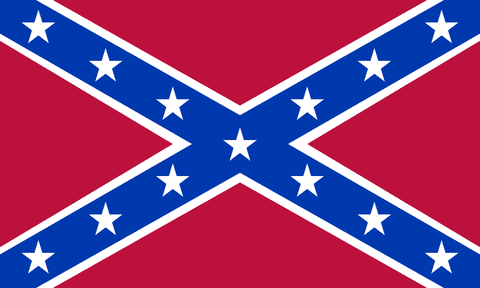 Confederate States of America1861–1865 · no longer existsFormed by the secession of eleven Southern states to preserve slavery, the Confederate States combined radical state confederalism, a traditionalist and religious agrarian society, and free trade, before being defeated in the Civil War.
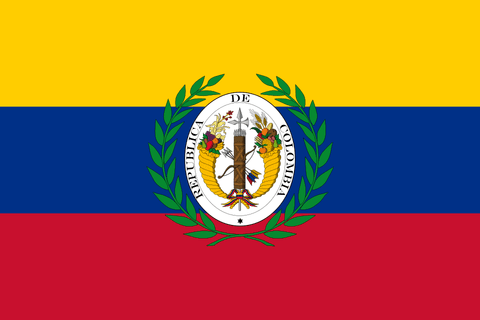 Gran Colombia1819–1831 · no longer existsAn ephemeral republic created by Simón Bolívar, Gran Colombia gathered vast territories of northern South America into a centralist, militarized state, which dissolved within a few years due to regional and political rivalries.
 German Empire (Second Reich)1871–1918 · no longer existsThe German imperial state from 1871 to 1918 united Prussian-led federalism, limited constitutional monarchy, male suffrage for the Reichstag, strong Kaiser and chancellor authority, rapid industrialization, militarism, and the foreign policy of a rising power.
 Austrian Empire (Habsburgs)1804–1867 · no longer existsFounded by the Habsburgs in 1804, the Austrian Empire was a multinational Central European monarchy until the Compromise of 1867. Under Francis I and Metternich, it combined centralized administration, Catholic primacy, and liberal repression.
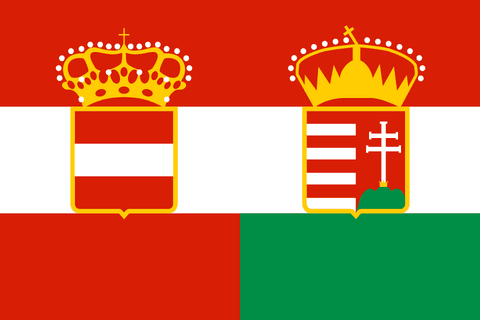 Austro-Hungarian Empire1867–1918 · no longer existsA dual monarchy in Central Europe, the Austro-Hungarian Empire gathered multiple nationalities under the Habsburg dynasty, combining aristocracy, imperial bureaucracy, political Catholicism, and growing nationalist tensions.
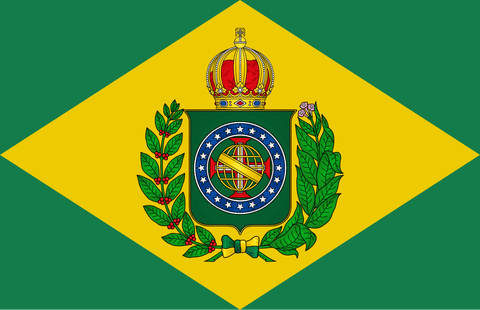 Empire of Brazil1822–1889 · no longer existsThe only long-lasting empire in the Americas, imperial Brazil was a parliamentary monarchy under Pedro I and Pedro II, marked by political stability, a slave-based agrarian economy, and strong state centralization.
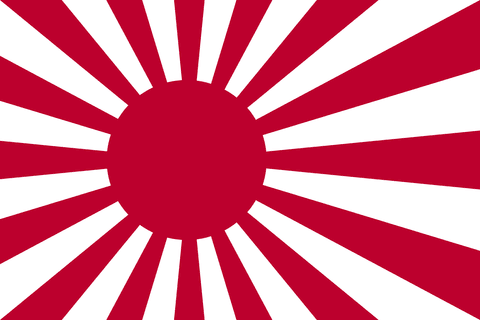 Empire of Japan1868–1947 · no longer existsThe Japanese imperial regime of the early 20th century combined sacred monarchy, militarism, accelerated industrialization, expansionist nationalism, and strong social discipline until its defeat in World War II.
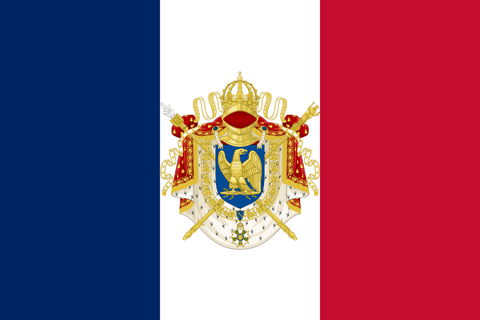 Napoleonic Empire1804–1815 · no longer existsUnder Napoleon Bonaparte, the First French Empire concentrated absolute power in the emperor, imposed the Civil Code and a centralized administration across conquered Europe, and sustained its territorial expansion through continuous warfare and a mass-conscription army.
 Meiji Japan1868–1912 · no longer existsDuring the Meiji Era, Japan underwent rapid modernization directed by the emperor, who abolished feudalism, industrialized the country, and created modern institutions, uniting tradition, nationalism, and military ascent.
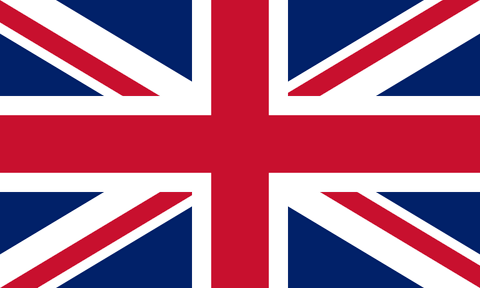 British Empire1837–1901 · no longer existsAt its Victorian height, the British Empire was the largest in history, uniting parliamentary monarchy, the industrial revolution, and global colonial rule, with strong commercial, naval, and cultural expansion across the world.
Guides and updates
Practical articles that support the main tool pages and answer long-tail search questions.
Blog