12 Axes — Free Political Spectrum TestLeft or right is one axis. Meet the other eleven.
Answer 36 statements, about 6 minutes, and get your political fingerprint. It shows where you sit on twelve separate axes and which of 129 modern countries' published profiles sits closest to yours.
Draw my fingerprint 36 questions · ~6 min Switzerland
Every country has a shape. What's yours?
Compare twelve dimensions of your views, not just left and right. The default comparison uses present-day profiles; historical regimes are a separate option. Similarity is a model-based reference, not a scientific assessment or an endorsement.
Choose 36, 60 or 240 questions. No login, no payment, and no need to publish your answers. Read your closest matches, compare differences, then decide whether you want to share.
Same label. Completely different shape.
"Democracy", "centrist", "left-wing": labels flatten everything into one line. Put two countries side by side and the line breaks.
- Diplomacy44 points apartMilitaristPacifist
- Intervention42 points apartNon-interventionistNationalist
- Religion40 points apartIrreligiousReligious
United States and Sweden differ by 20+ points on 7 of 12 axes.
Can you read a fingerprint?
Each petal is one axis. The longer the petal, the closer the country sits to the first pole of that axis. Guess whose shape this is.
Tip: a long Representation petal points toward Democracy; a long Economy petal points toward Public.
Twelve questions the left–right line can't answer.
Each dot is a modern country. See how differently the world spreads out on each axis.
Open a dimension to see what it measures. The two poles organize the questionnaire; they are not good and bad grades, and a higher number is not a better result.
Understand each of the 12 axes
What this axis measures
Should decisions stay close to local communities, or should national rules be uniform? This dimension concerns the distribution of authority. Local autonomy is distinct from wanting smaller government: federal systems can still fund extensive public services.
What this axis measures
How should leaders gain authority? Elections, opposition rights and democratic checks contrast with concentrated or unelected leadership. Think about your preferred decision-making process, rather than whether you like the government currently in office.
What this axis measures
This axis explores security and individual liberty through surveillance, policing, privacy and state control. Valuing safety does not mean accepting every security measure. Consider the principle behind each statement, not promises of guaranteed safety.
What this axis measures
Should newcomers adopt a shared national culture, or should different cultures coexist more independently? Assimilation and multiculturalism describe policy priorities, not the worth of migrants or predictions about a specific policy's effects.
What this axis measures
How much weight should armed strength carry compared with negotiation and peaceful cooperation? You can support national defense while disagreeing with a particular intervention; consider each statement about force and diplomacy on its own terms.
What this axis measures
This axis compares non-intervention with assertive national interests abroad. It is separate from military-versus-peace preferences: influence can also be economic or diplomatic. These labels cannot capture every possible approach to international relations.
What this axis measures
Who should own important resources and provide services? Public ownership and private enterprise are separate from regulation. You might support private businesses alongside public healthcare, or competition in one sector and public ownership in another.
What this axis measures
Should economic activity be coordinated through public planning or market competition? Keeping coordination separate from ownership distinguishes markets with safeguards from direct state management. A mixed economy can combine several approaches rather than fitting one extreme.
What this axis measures
Should trade prioritize domestic production or cross-border exchange? Protectionism and globalism describe broad priorities, not verdicts on individual trade agreements. Consider how policy should respond when domestic interests and international opportunities conflict.
What this axis measures
What role should religion have in public institutions and laws? This is not a test of personal spirituality. Someone can practice a faith privately while supporting separation between religious authority and the state.
What this axis measures
How should society respond to changes in customs, family life and civil rights? Progressive and traditionalist labels are context-dependent. Disagreement on one cultural question need not determine every other social belief or describe your character.
What this axis measures
How should society balance technological development with biological and environmental caution? Questions explore AI, genetic engineering, preservation and restraint. Supporting innovation does not mean endorsing every application; this is not a test of technical expertise.
What do the 12 axes tell you?
A single political label can hide important disagreements. Two people might both support elections yet disagree about trade, public services or surveillance. The 12 axes approach keeps those preferences separate, so you can see the shape of your views without assuming that agreement on one issue means agreement on everything else.
Use this for reflection, not diagnosis. Answer according to the principle each question describes, rather than trying to produce a preferred country. If your view depends on context, neutral may fit; if you cannot form a position, skip. You can return to a statement before generating your result.
How to read your political spectrum result
- Start with the dimensions. Look for positions that feel familiar and unexpected. A middle score can reflect consistent moderation or a mixture of answers; it does not explain every reason behind your choices.
- Compare, rather than identify. The three closest country profiles are a way into the data, not a claim that you belong to a country or ideology. The result shows where you agree and where the differences are largest.
- Check the reference profile. Open a country page to see its axis values and related profiles. Distinguish contemporary states and territories from historical regimes, and treat undocumented scores with appropriate caution.
- Share only if you choose. You can copy a result link or download an image card. Discuss the issues behind the numbers with friends, rather than treating a match as a verdict about anyone's beliefs.
A transparent comparison, with clear limits
The test converts answered statements into axis positions, then compares them with country vectors using equal-weight Manhattan distance: the absolute gaps across the dimensions are added together. Lower distance means greater similarity. Unanswered axes are excluded and the remaining distance is rescaled, so skipping dimensions does not automatically award a higher match. Our normalization and result version belong to this site; percentages may differ from other implementations.
The directory contains 209 political-system profiles, not a survey of 209 populations. The original records do not provide scoring dates or reference lists. Political systems also change, so a familiar country name does not make a model score a verified description of today's institutions. The 12 axes test is an exploration tool, not a validated psychological instrument, policy recommendation or scientific prediction.
Questionnaire and reference profiles reused with permission. This site uses its own matching implementation; attribution is not independent verification of the profile scores.
Explore the profiles behind your matches
Browse present-day countries and territories to understand the comparison data. Profile scores are interpretations: the original entries do not provide scoring dates or reference lists.
View all present-day profiles12 axes test: frequently asked questions
What is the 12 axes political spectrum test?
It is a free questionnaire that describes your stated political preferences across twelve separate dimensions. Instead of reducing every answer to one left-right label, the result keeps economic, institutional, cultural and technological positions distinct. You can then explore which country profiles are closest within the comparison model, and where those profiles differ from your own answers.
Which test length should I choose?
The quick version contains 36 questions, the standard version 60, and the full version 240. All use the same twelve dimensions and question bank. Choose the quick test for an introduction, or a longer version if you want to reflect on more statements within each axis. More questions are not a guarantee of scientific accuracy; the result still depends on the model and your interpretation of the wording.
Is a neutral answer the same as skipping a question?
No. Neutral records a middle position on that statement. Not sure / skip records no position and does not push you toward the center. If you skip every question on one axis, that axis is left out of matching and the remaining axes are rescaled. If you answer nothing, no match is generated. Use the question explanations when a term or trade-off is unclear.
What does a country similarity percentage mean?
It describes closeness between your twelve-axis result and a published political-system profile, using our matching method. It is not a probability that the country represents you, a measure of its residents' opinions, or advice about where to live. Read both the agreements and differences. Countries with similar overall scores can still differ substantially on the dimension you care about most.
Is the test free, and do I need an account?
You can take the test, read the country comparisons, copy a result link and download an image card without an account or payment. The questionnaire runs in your browser. The test route does not load third-party analytics scripts. Raw answers are not uploaded to our service, and closing the tab clears the in-memory answers unless you keep a shareable result yourself.
What is included in a shared result?
A share link encodes the axis positions and result version, not your name or individual question answers. The code is readable, not encrypted: anyone with the link can inspect the result and compare it with the directory. Do not share it if you want those preferences to remain private. A result link placed in a browser address can also remain in local history or synced history.
Are historical regimes included in my default matches?
No. The default comparison uses the current-country and territory category, containing 129 profiles. Another 80 entries describe historical systems. You can opt into those comparisons separately; historical entries are marked as no longer existing. A match with any profile is a comparison of the model's dimensions, not approval of that state's policies, leaders or record.
Modern country
Afghanistan
An Islamic emirate ruled by the Taliban since 2021, Afghanistan is governed by a clerical supreme leader who imposes a strict interpretation of sharia, bars women from education and work, and faces economic crisis and isolation.
Modern country
South Africa
A parliamentary republic, South Africa is the continent's largest industrial economy and a multiracial democracy born from the end of apartheid, marked by cultural diversity and deep social inequalities.
Modern country
Albania
A Muslim-majority parliamentary republic in the Balkans, Albania is a secular state with strong interfaith coexistence, a market economy after the end of Enver Hoxha's communist regime, NATO membership, and candidacy for the European Union.
Modern country
Germany
A parliamentary federal republic, Germany is Europe's largest economy, with a social market economy, a strong export industry, and a central role in the European Union, uniting democratic stability and geopolitical weight.
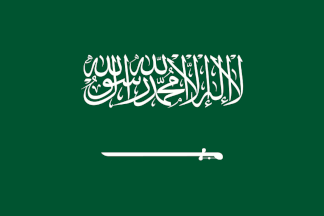
Modern country
Saudi Arabia
An absolute Gulf monarchy, Saudi Arabia unites power concentrated in the royal family, strict application of Islam, and an oil-dependent economy, pursuing controlled modernization under the crown prince's leadership.
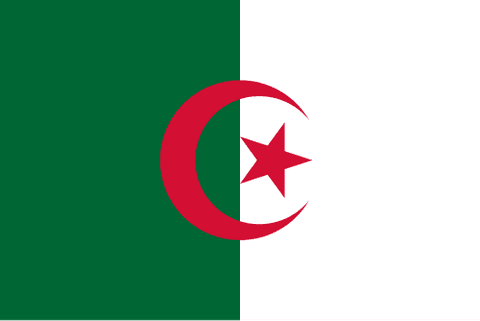
Modern country
Algeria
Born from the war of independence against France, Algeria is an army-dominated republic with Islam as the state religion, a state-run economy dependent on oil and gas, a non-aligned foreign policy and repression of the Hirak movement.
Your shape is waiting.
36 statements · about 6 minutes · answers stay in your browser
Draw my fingerprint →Results compare your answers with published country profiles. They're a mirror for reflection and conversation, not a precise measurement.